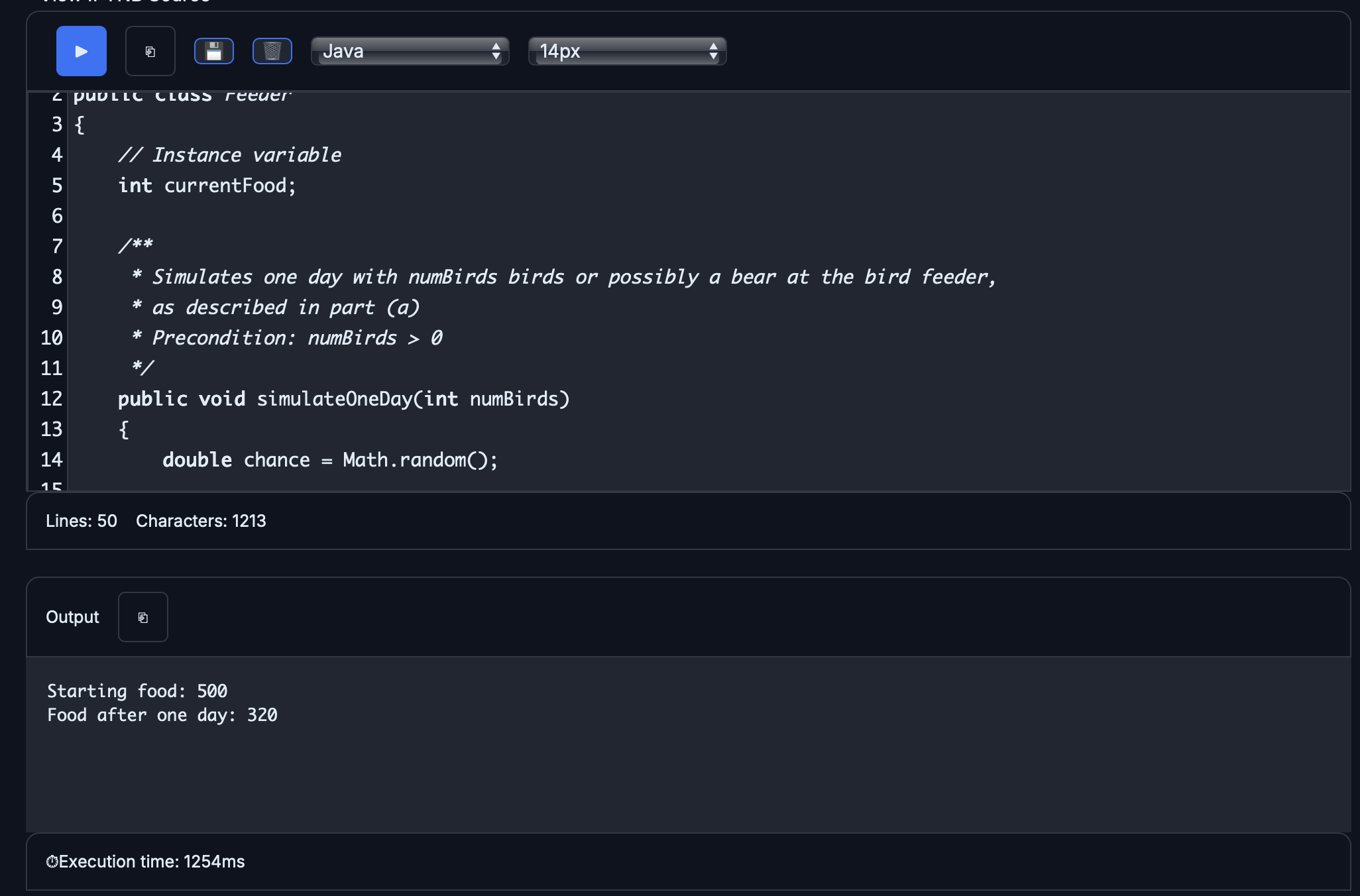
Code:
public class Feeder
{
    // Instance variable
    int currentFood;

    /**
     * Simulates one day with numBirds birds or possibly a bear at the bird feeder,
     * as described in part (a)
     * Precondition: numBirds > 0
     */
    public void simulateOneDay(int numBirds)
    {
        double chance = Math.random();

        // 5% chance a bear visits
        if (chance < 0.05)
        {
            currentFood = 0;
        }
        else
        {
            int gramsPerBird = (int)(Math.random() * 41) + 10; // 10–50 inclusive
            int totalConsumed = numBirds * gramsPerBird;

            if (totalConsumed >= currentFood)
            {
                currentFood = 0;
            }
            else
            {
                currentFood -= totalConsumed;
            }
        }
    }

    /* There may be instance variables, constructors, and methods that are not shown. */
    public static void main(String[] args)
    {
        Feeder feeder = new Feeder();
        feeder.currentFood = 500;

        System.out.println("Starting food: " + feeder.currentFood);

        feeder.simulateOneDay(12);

        System.out.println("Food after one day: " + feeder.currentFood);
    }
}
Approach
- The method first generates a random number to determine whether the day is abnormal (a bear visits) or normal (only birds visit).
- If the random value indicates a bear visit (5% chance), the feeder is immediately emptied by setting currentFood to 0.
- Otherwise, the method randomly selects how many grams each bird eats (from 10 to 50 grams, inclusive).
- It then calculates the total food eaten by multiplying the number of birds by the grams per bird.
- If the total food eaten is greater than or equal to the amount in the feeder, the feeder is emptied; otherwise, the total eaten is subtracted from currentFood.
/**
 * Returns the number of days birds or a bear found food to eat at the feeder
 * in this simulation, as described in part (b)
 * Preconditions: numBirds > 0, numDays > 0
 */
public class Feeder
{
    int currentFood;  // instance variable

    // Minimal simulateOneDay so code compiles and runs
    public void simulateOneDay(int numBirds)
    {
        int foodEaten = numBirds * 10;
        currentFood = Math.max(0, currentFood - foodEaten);
    }

    public int simulateManyDays(int numBirds, int numDays)
    {
        int daysWithFood = 0;

        for (int day = 0; day < numDays; day++)
        {
            if (currentFood == 0)
            {
                break;
            }

            daysWithFood++;
            simulateOneDay(numBirds);
        }

        return daysWithFood;
    }
    public static void main(String[] args)
    {
        Feeder feeder = new Feeder();
        feeder.currentFood = 50;   // starting food

        int result = feeder.simulateManyDays(2, 10);

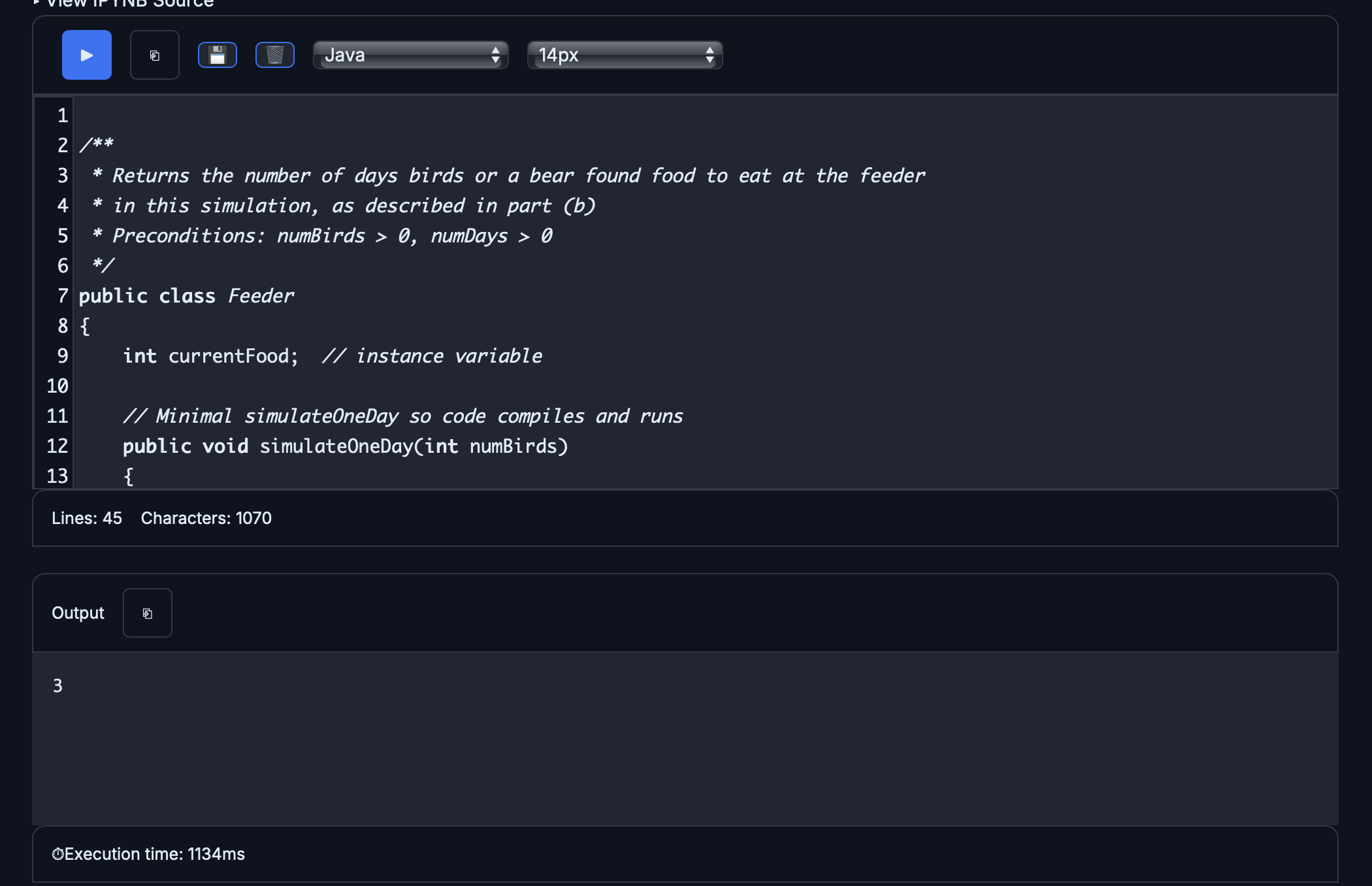
        System.out.println(result); // Expected output: 3
    }
}
Approach
- The method starts by creating a counter called daysWithFood to track how many days food was available at the feeder.
- It runs a loop for at most numDays days to simulate each day one at a time.
- At the start of each loop iteration, it checks whether currentFood is zero and stops the simulation early if the feeder is empty.
- If there is still food, it counts the day by incrementing daysWithFood and then calls simulateOneDay(numBirds) to simulate visitors eating that day.
- After the loop finishes, the method returns daysWithFood, which represents the number of days visitors found food at the feeder.